Mausam, Dubai: Mughal architecture inspiration
An architectural bridge between past and present that transports diners into Indian culture through a design inspired by Mughal tradition and a terracotta palette.
Located in the heart of the Dubai Mall, one of the most visited commercial spaces in the world, the Mausam restaurant stands out for the evocative power of its design, created by the 4SPACE studio.
The name Mausam — a Hindi word meaning "season" — anticipates the philosophy guiding the project, suggesting emotions, atmospheres, and a concept of cyclicity, visually and sensorially narrating the richness of Indian cultural identity reinterpreted with a modern approach. The primary inspiration comes from the majestic Red Fort of Delhi, reinterpreted through a contemporary aesthetic language that combines architectural monumentality with refined details.
Mughal-Inspired Ambiance
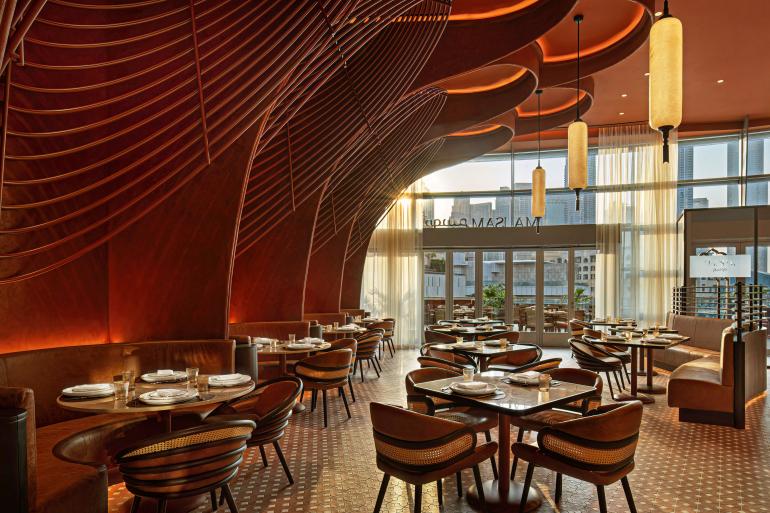
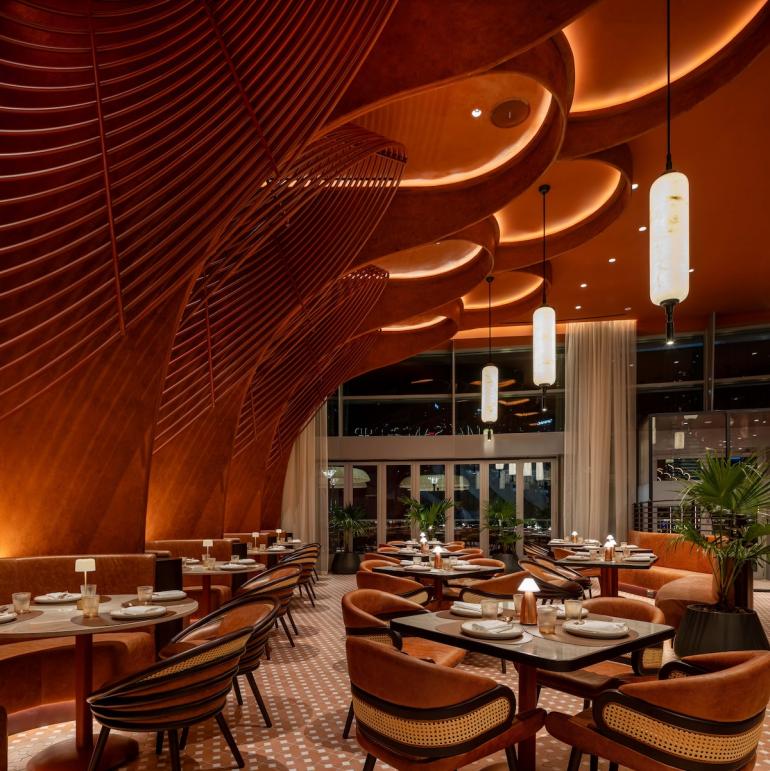
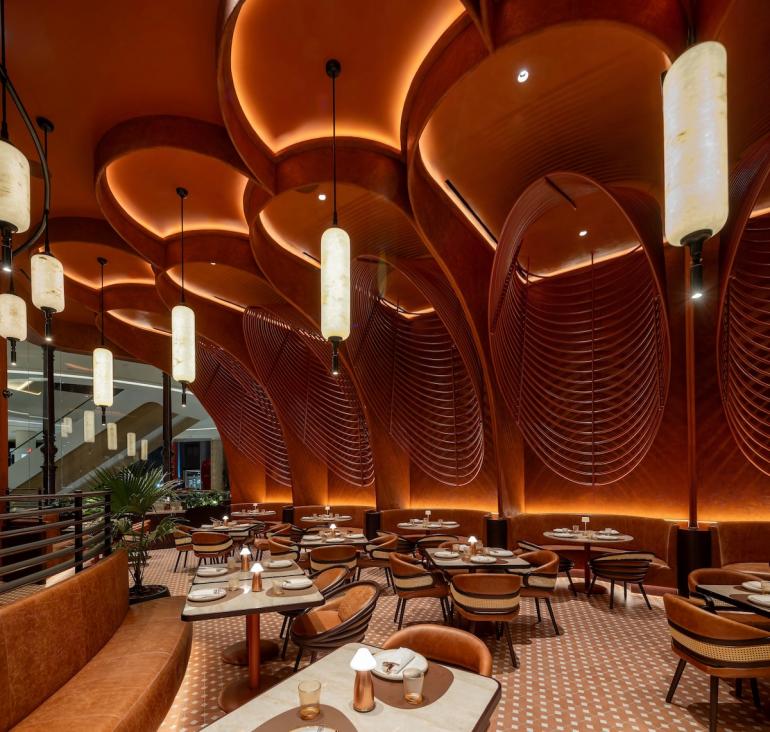
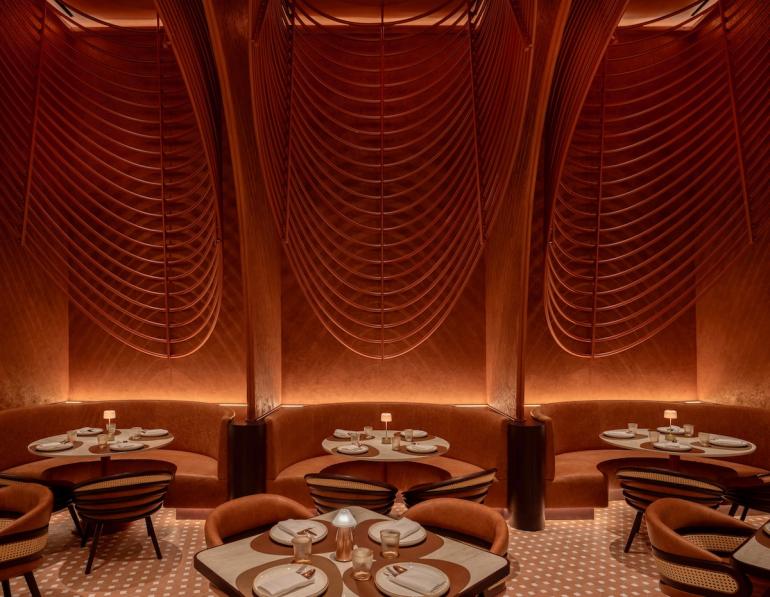
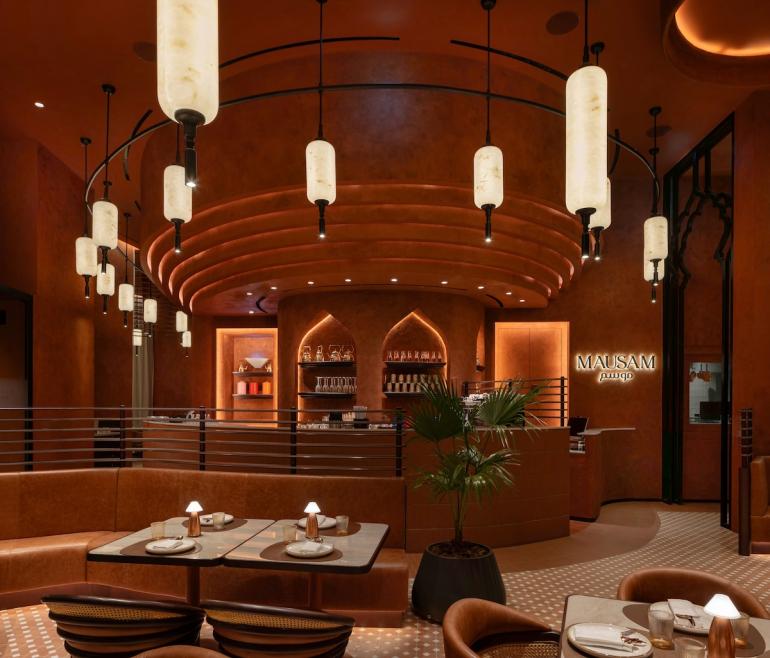
Upon entering Mausam, guests are immediately enveloped in a setting that reinterprets Mughal design principles — arches, rhythmic geometries, and lattice patterns — transforming them into an enveloping, fluid, almost dreamlike spatial experience. The imposing arches that punctuate the restaurant recall the forms of imperial Indian portals but are lightened by a formal cleanliness that modernizes their meaning and enhances their function. The perforated screens — jalis — dear to India's historical architecture, are reinterpreted in a contemporary key to introduce plays of light and shadow while ensuring visual privacy and perspective depth.
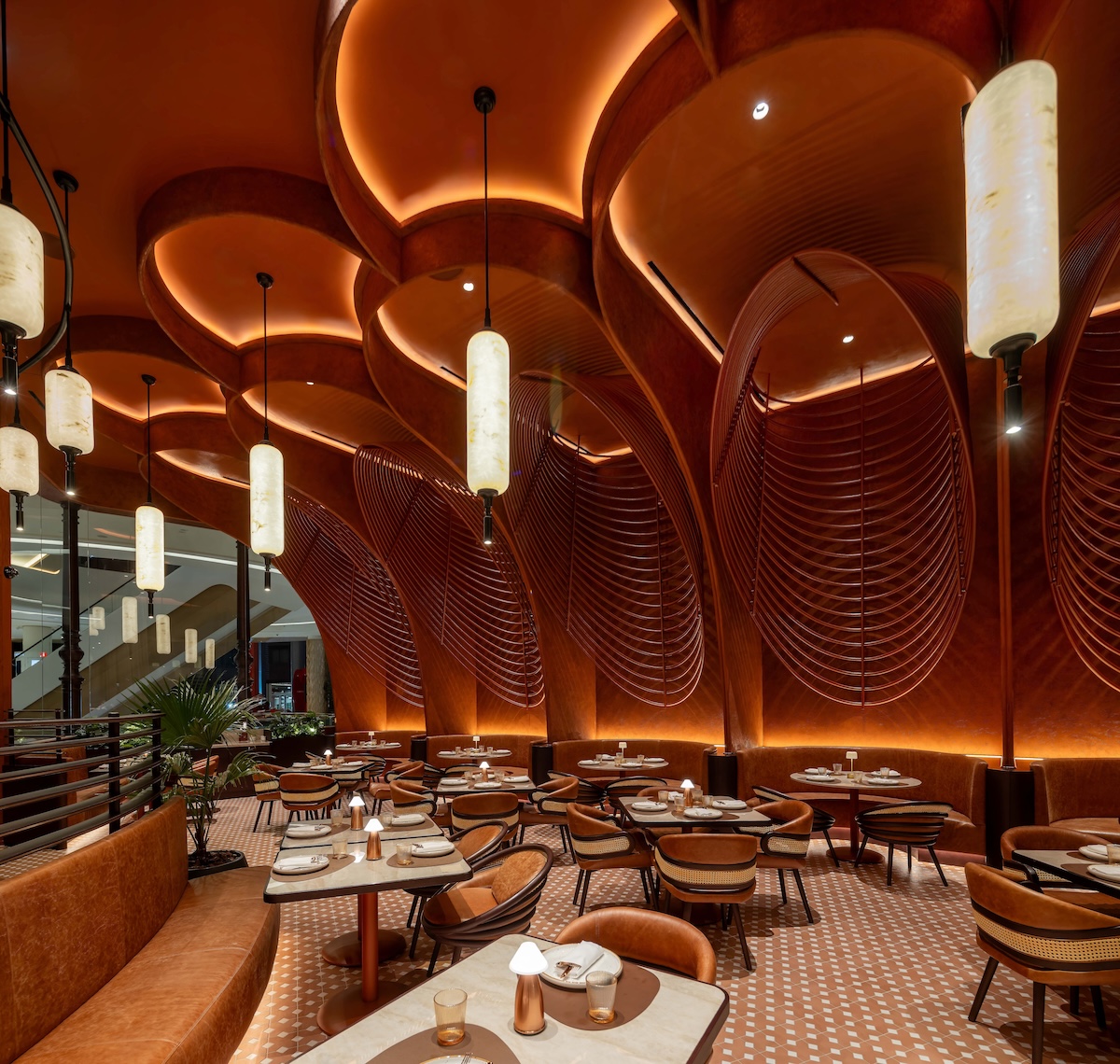
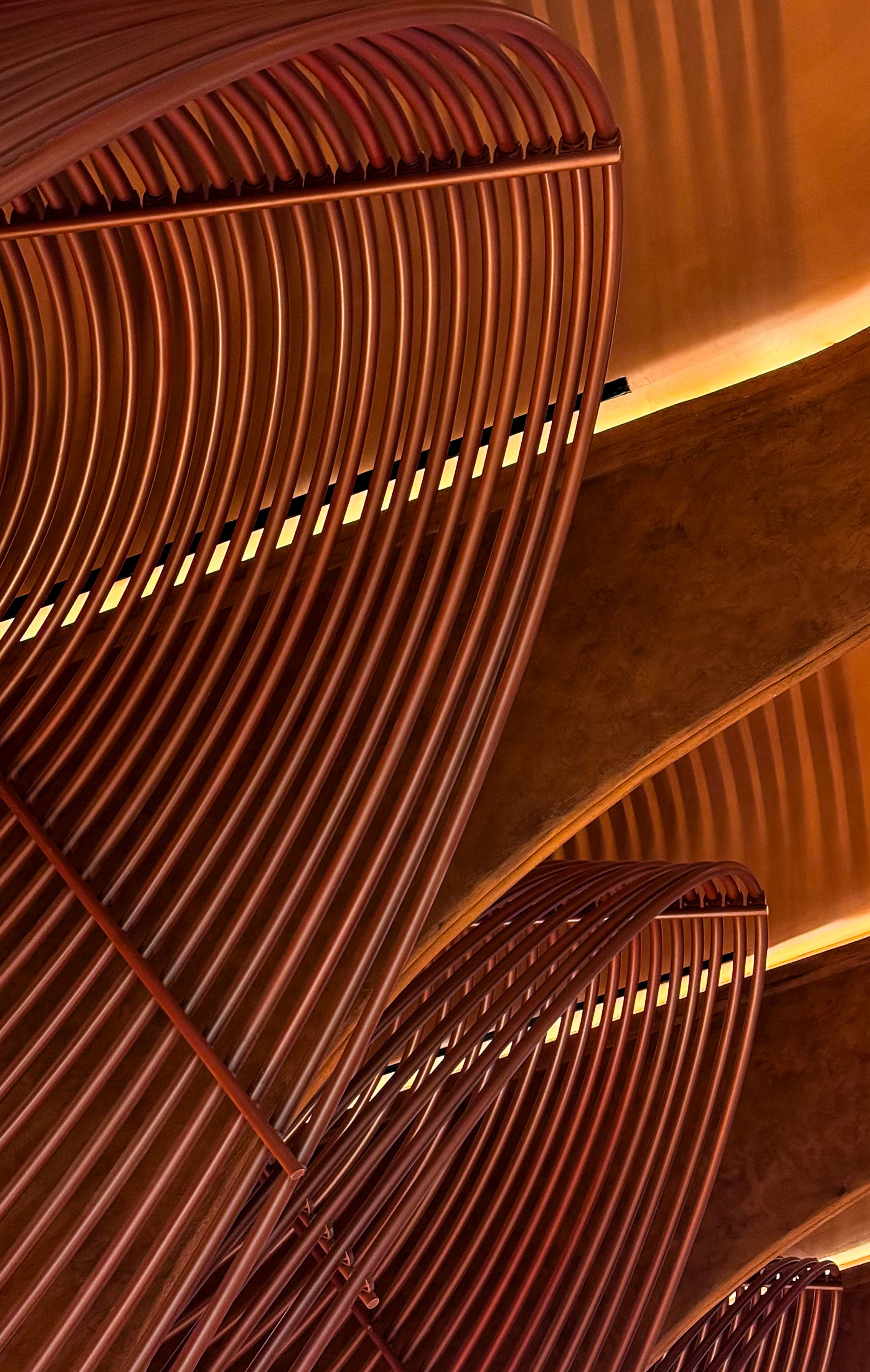
One of the most striking elements is the sculptural installation of rings: a succession of curved metallic forms rising from the floor to the ceiling, reminiscent of the structure of domes and grilles in ancient palaces. The rings are treated with a matte metallic finish in warm tones like terracotta and ocher. The effect is theatrical yet measured: light, skillfully diffused through hidden LEDs and suspended lanterns, glides over the curvilinear profiles, amplifying the sculptural dimension of the environment.
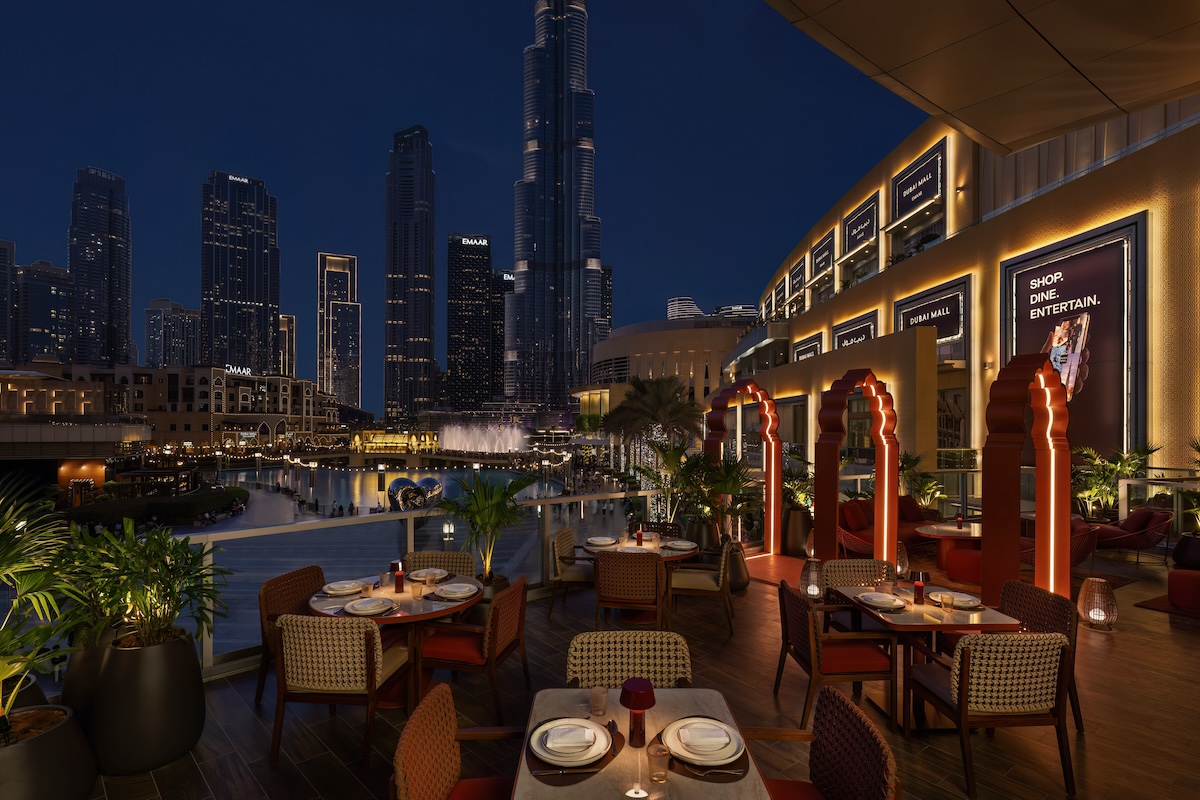
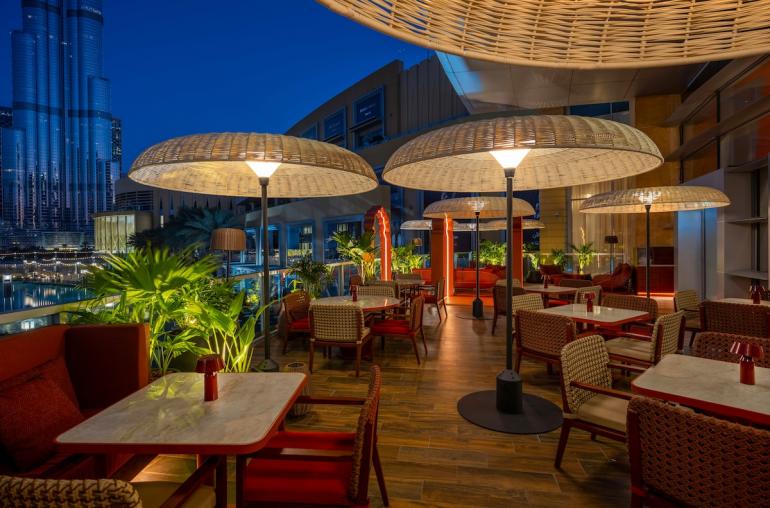
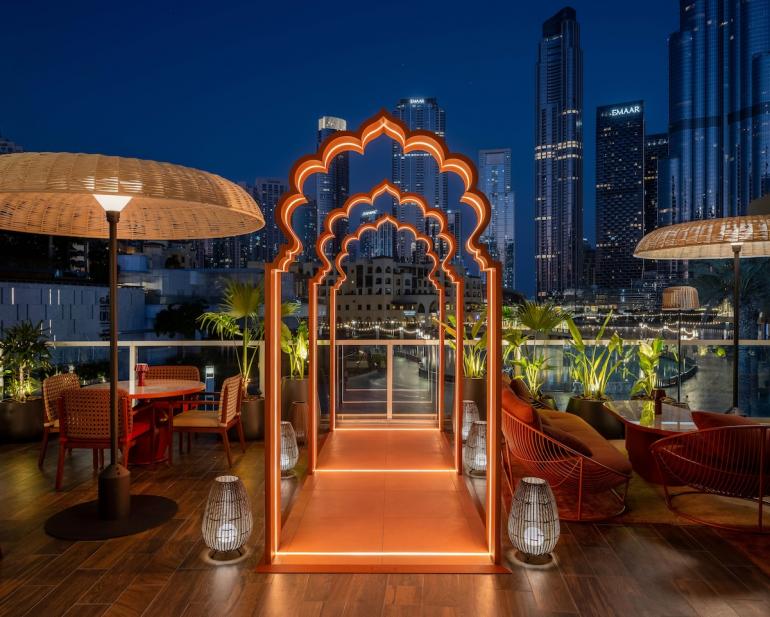
Outside, the terrace extends Mausam's narrative toward the city. A large illuminated arch frames the panorama of the Burj Khalifa and the Dubai Fountain, creating a new balance between the interior and exterior.
A Gastronomic Theater of Glass and Fire
The open kitchen is the project's focal point: screened by an elegant glass wall, it houses the tandoors, traditional Indian clay ovens, which dominate the scene with their material strength. Copper and brass pots — typical materials of Indian tradition — complete the composition, offering warm reflections and conveying ancient culinary wisdom. The kitchen thus becomes a performative space, open to view, that adds value to the act of cooking and strengthens the link between gastronomic culture and architectural space.
The Centrality of Materials
The material scheme is a crucial element for the restaurant's visual outcome, supporting and enhancing its narrative concept. The palette is dominated by earthy, red, and orange nuances, a direct tribute to monumental Indian architecture. The terracotta-textured coverings, which also characterize the exterior facade, reproduce the authenticity of red sandstone, an iconic material of Mughal palaces.
Inside, every surface is designed to offer a distinct material sensation. The walls are treated with artisanal mural finishes, where warm pigments are layered irregularly, creating a tactile and authentic feel. The engineered stone by Cosentino used for the table tops combines elegance and functionality, creating a sophisticated contrast with the raw materiality of the other surfaces.
Natural fibers, leather, and woven rattan make up the seating and furniture coverings, all custom-designed by the Al Huzaifa brand. The floor also contributes to the narrative, with decorated ceramic tiles in warm shades of terracotta and ivory laid in a geometric pattern inspired by traditional Indian patterns often found in Mughal courtyards. This flooring anchors the space to its cultural context while providing the durability and practicality essential for a high-traffic hospitality venue.
Ph. Anas Rifai