REM Station: finishing a public space with ceramic tiles
Céragrès, a Quebec company specializing in high-quality finishing materials, played a critical role in the construction of the Réseau express métropolitain (REM), the Greater Montreal area’s new light-rail transit system that is transforming the agglomeration’s transportation network. Armed with extensive technical expertise and the ability to design custom solutions, Céragrès was engaged during the project’s initial phases by the architectural consortium led by Lemay. Its role was to select the materials to be used for finishing the stations and to ensure coherence between aesthetics and function.
The REM is a structurally significant project for the metropolitan area, with 26 stations on a main line and three separate branch lines providing automated light-rail service on a total of 67 kilometres of track. Each REM line has a distinct visual identity – white, green, blue, yellow, silver-grey or brick red – seen prominently in each station’s architecture. This design choice necessitated a meticulous approach to materials in order to ensure the legibility and uniqueness of each part of the network, while meeting high standards for sustainability and performance.
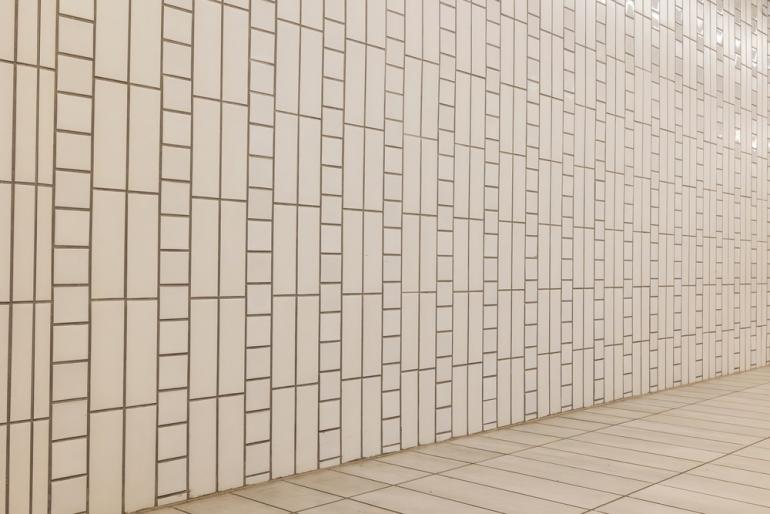
Under these demanding conditions, Céragrès designed and developed surfaces specifically for the REM’s public spaces. In particular, the company produced terrazzo-effect porcelain tiles, customized to the colour palettes developed for each line, as well as “subway tile” type wall finishes tailored to the human scale of foot traffic and manufactured in custom 4"x4" and 4"x12" sizes.
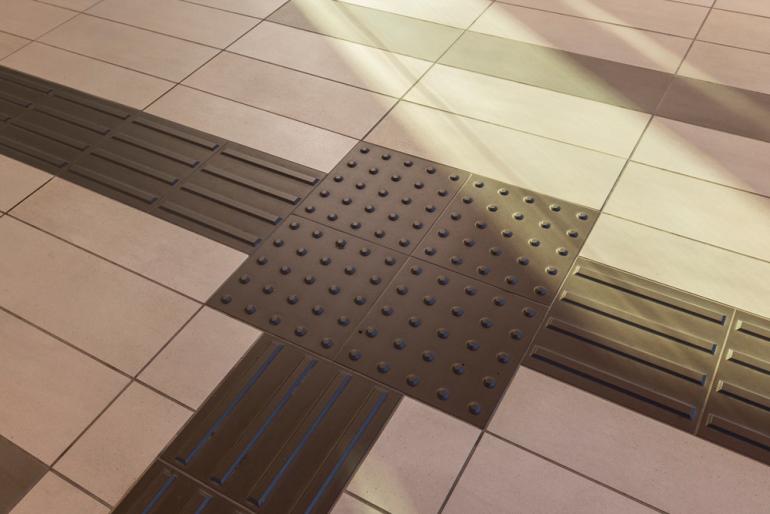
Beyond aesthetics, the technical quality of the materials was a paramount concern. The stations had to include surfaces that would withstand freeze-thaw cycles and intense wear and tear while also meeting universal accessibility standards. To that end, Céragrès participated in the development of non-slip tiles for main traffic areas, and textured tiles to assist visually impaired persons.
The production of the materials was carefully executed: the floor tiles were manufactured in Italy, while the wall tiles come from Germany. Céragrès centralized the receiving of all products in it Montreal warehouses, ensuring precise management of supplies in order to maintain uniform material quality in all stations of the REM network.
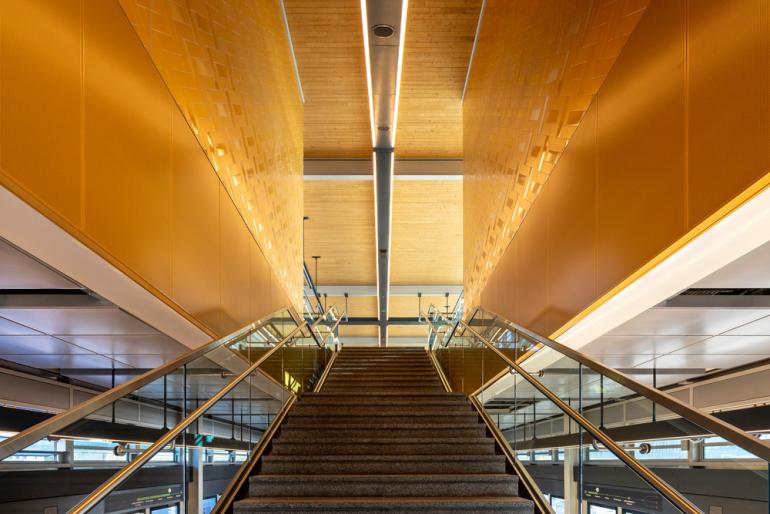
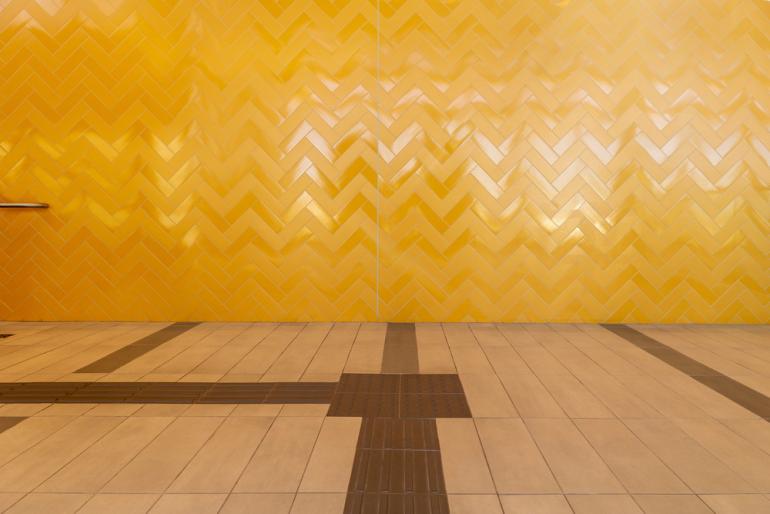
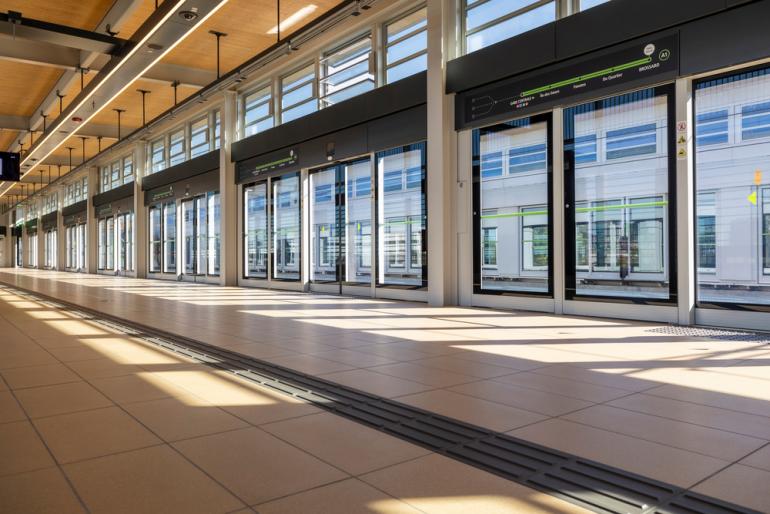
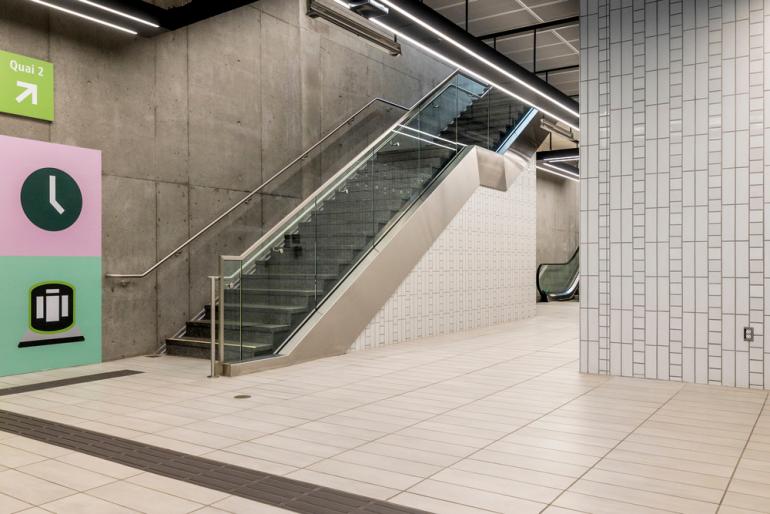

The technical challenges were particularly daunting in the underground stations. These environments required the installation of large-format ceramic panels on mechanical anchoring systems – a method more commonly used on exterior building façades than on indoor infrastructure. The solution, proposed and supported by Céragrès, enables not only a better response to structural constraints, but facilitates access to the underground environment’s critical maintenance spaces.
Through its contribution to the REM, Céragrès is demonstrating its strategic role in the development of sustainable, accessible and decisively forward-looking public architecture. The project is a testament to the ability of Quebec-based expertise to meet the complex challenges of contemporary urban development, while highlighting the importance of functional, high-performance design for the community.