Cukiernia: Ukrainian patisserie reborn through tradition and monomaterials
Since the early 2000s, Cukiernia, a patisserie located on the first floor of a historic building in the center of Lviv, has been the city's go-to spot for its sweet creations. YOD Group oversaw its renovation, introducing bold design elements that enhance the customer experience, focusing on a forward-thinking material approach.
MARBLE AND EGGshells
Far from being a mere aesthetic restyling, the project aimed to rethink the entire concept to infuse new energy into the space without distorting its essence. To achieve this, it utilized a palette of "monomaterials," a testament to sustainability and functionality. Supported by light wood and noble brass elements, the interior design combines two main materials: Italian marble and a material created specifically for the project, derived from food waste.
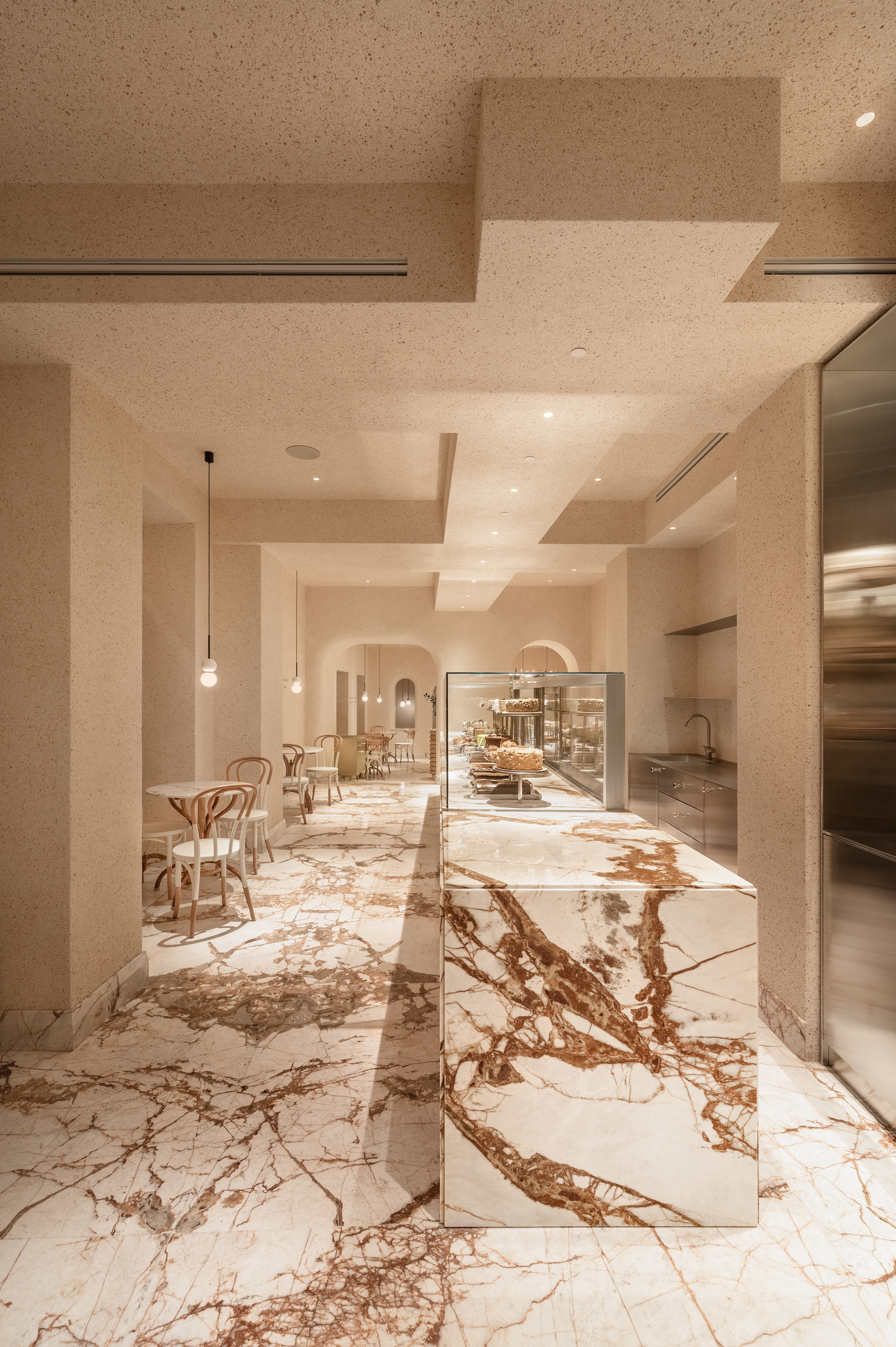
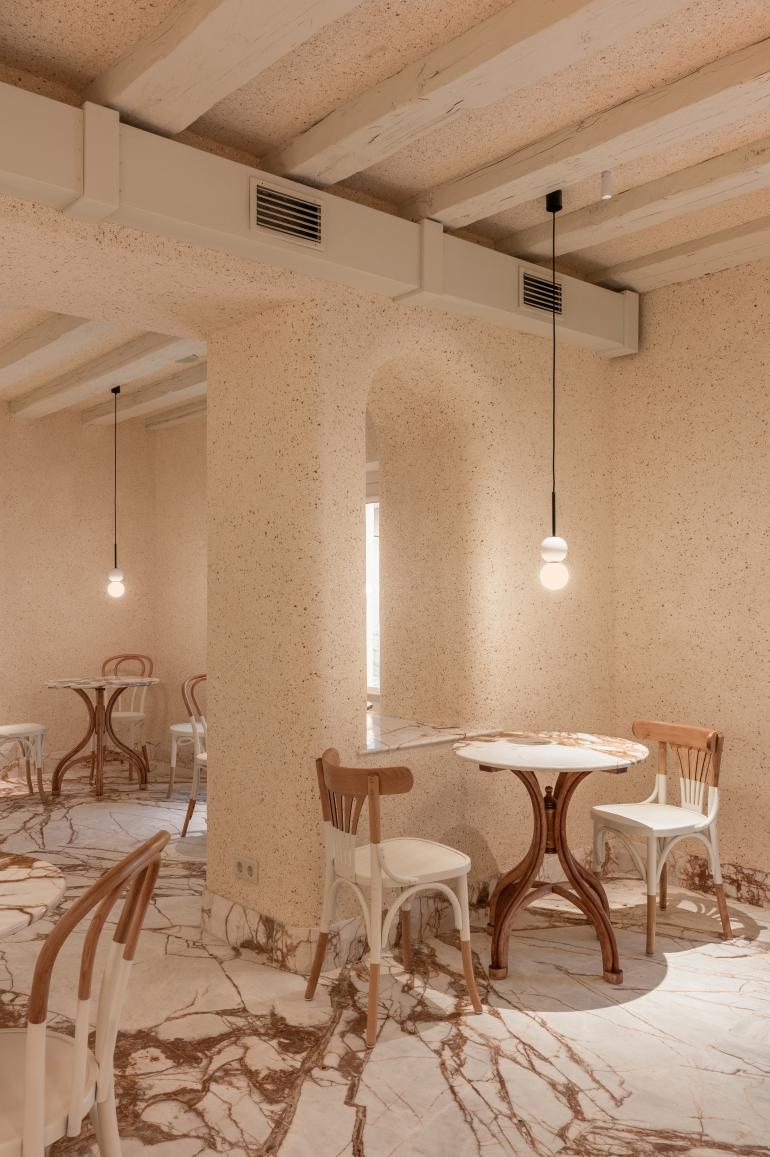
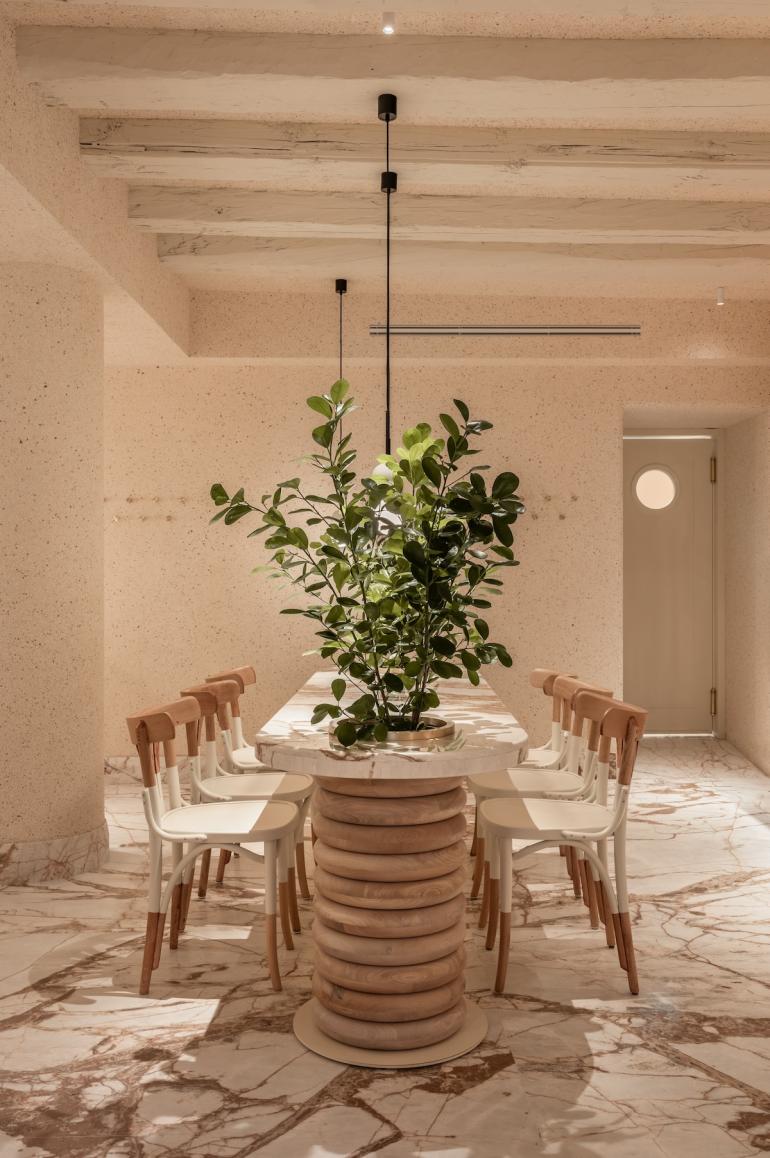
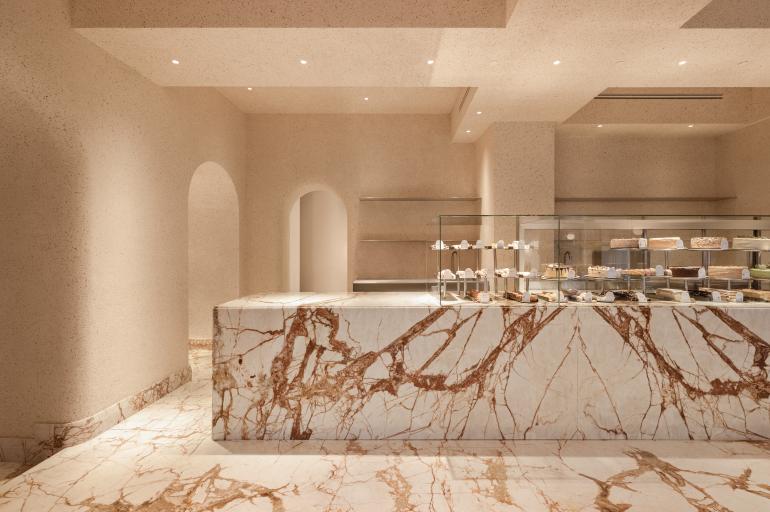
The former, in warm shades ranging from beige to brown, covers the horizontal surfaces, such as the floor and table tops. Its intriguing veins evoke the theme of caramel or cream, typical of layered desserts. To sight and touch, the natural stone conjures a sense of sumptuousness and refinement that perfectly complements the establishment's offerings
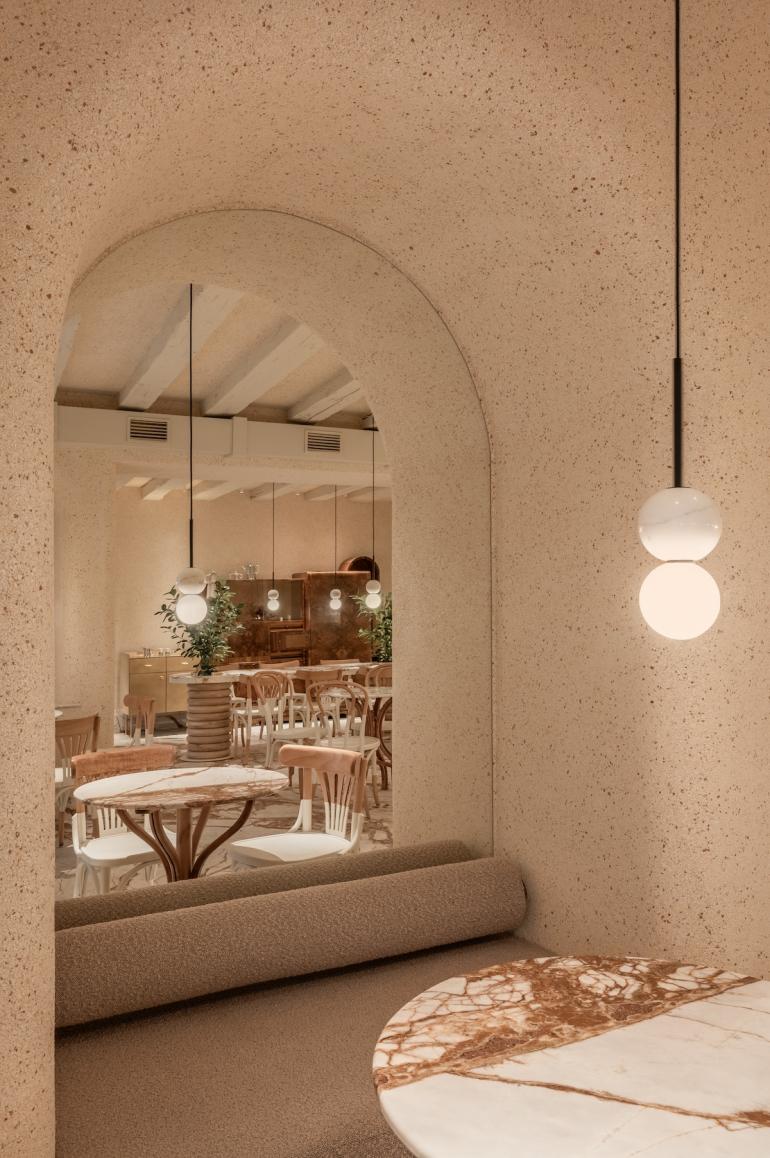
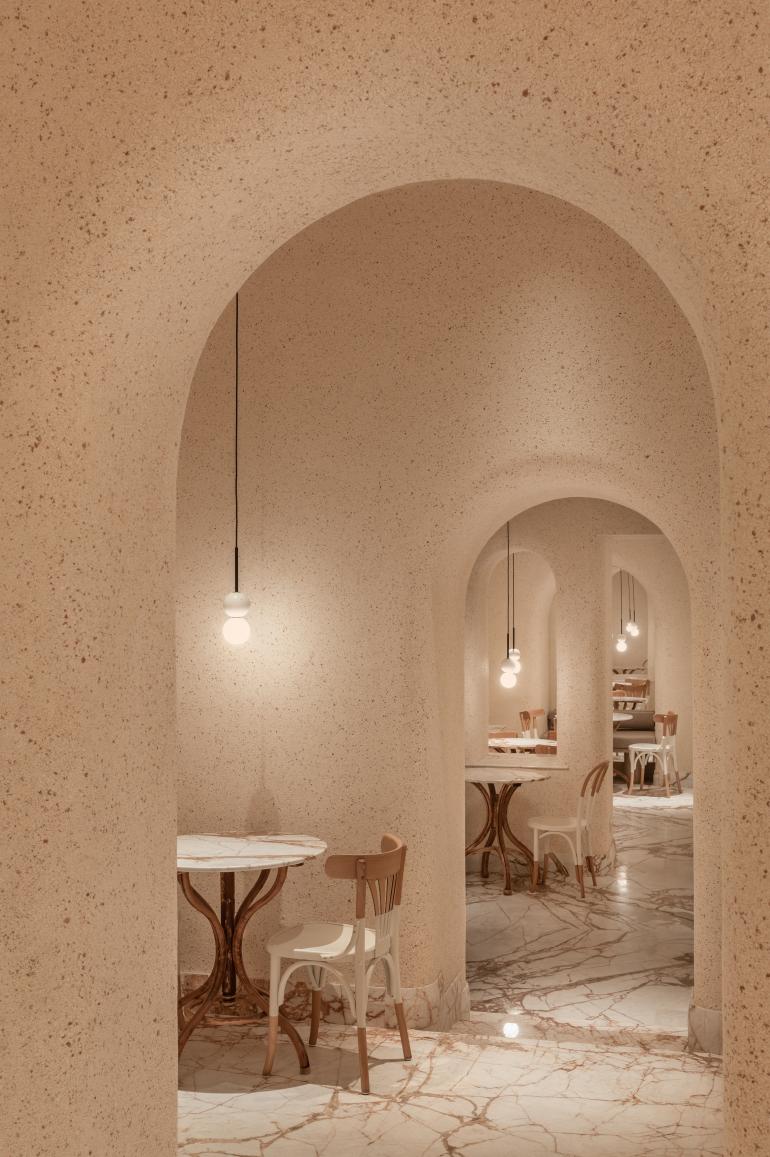
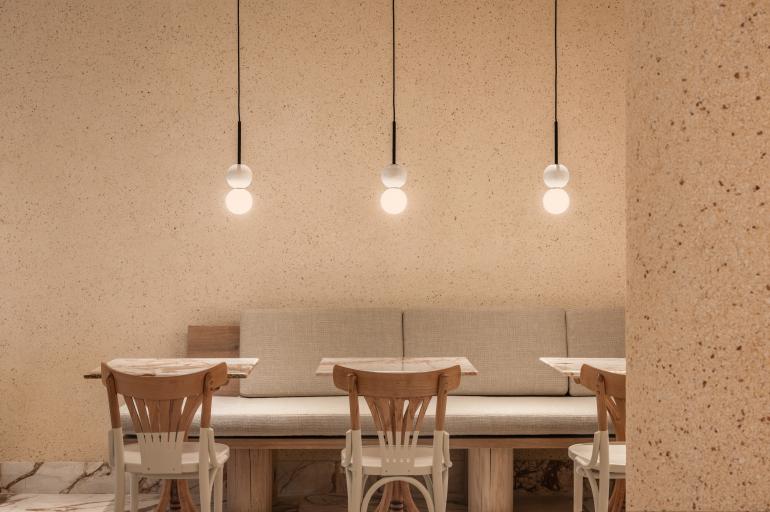
The walls, a true distinctive feature of the new Cukiernia, are covered with a unique eggshell-based plaster. This was not a random choice, considering eggs are a key ingredient in pastries, present in almost every menu item. To create this peculiar coating, a Ukrainian poultry farm donated over a ton of shells, which were carefully washed, dried, and crushed to the desired granularity, then mixed with a special adhesive base.
Numerous experiments led to identifying the correct grinding degree, formula, and best application technique. It was crucial for the eggshell to remain recognizable on the wall surface without being excessively rough or abrasive, to prevent customers' clothes or hands from snagging or scratching upon contact.
A further challenge concerned the plaster's shade: the shells provided by the farm were predominantly white, while the project required a warmer tone. The solution came from Cukiernia's own pastry chefs, who collected the shells from red eggs used in preparations during the renovation. By combining 1300 kilograms of white shells with 200 kilograms of red shells, it was possible to achieve the perfect hue for the environment.
LAYOUT AND INTERIOR
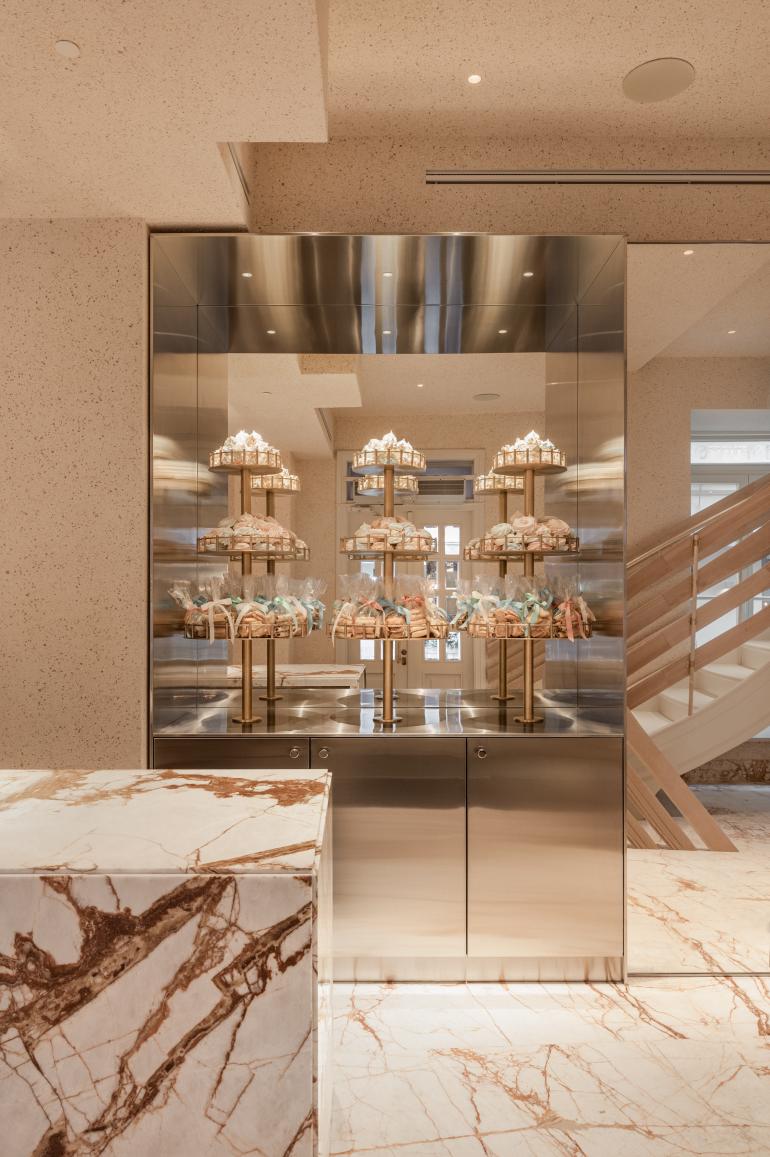
The renovation by YOD Group also involved a change in the space's distribution. The establishment is divided into three rooms. The first, serving as an entrance, houses a multi-level display case for pastry products, designed to allow guests to move around and observe the assortment of cakes, cookies, and pastries. A wooden staircase, with soft and dynamic handrails, leads to the upper level.
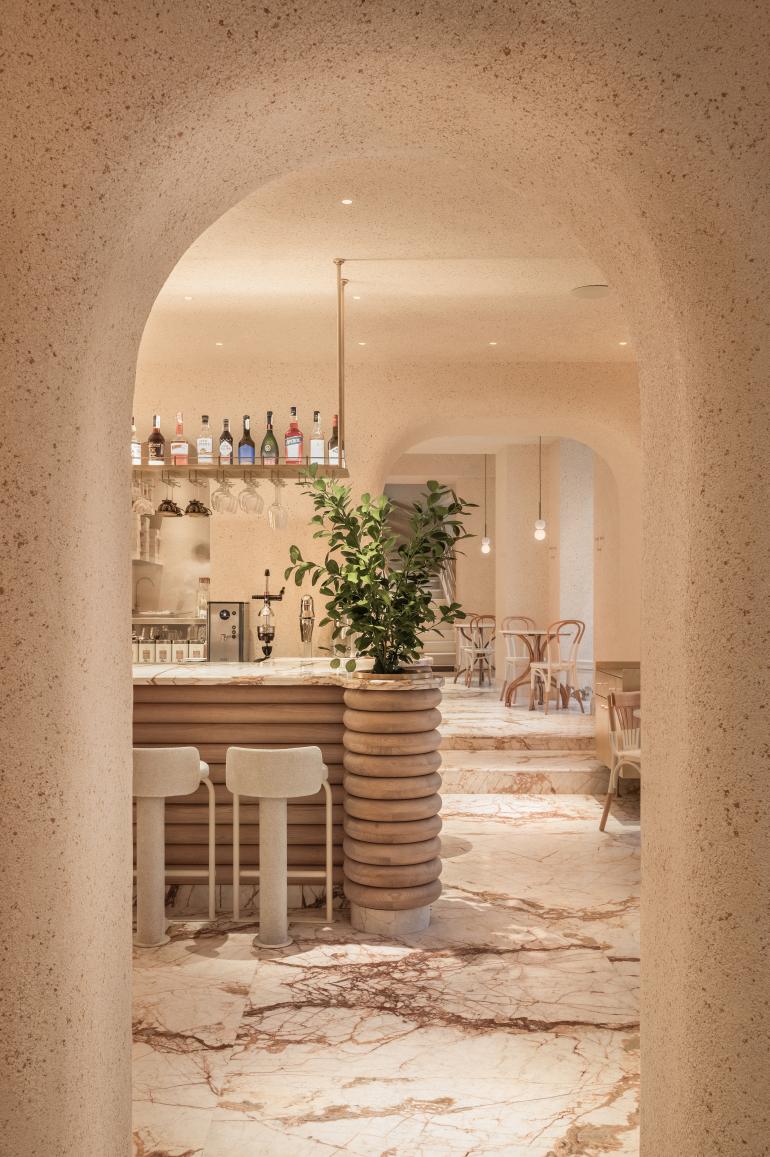
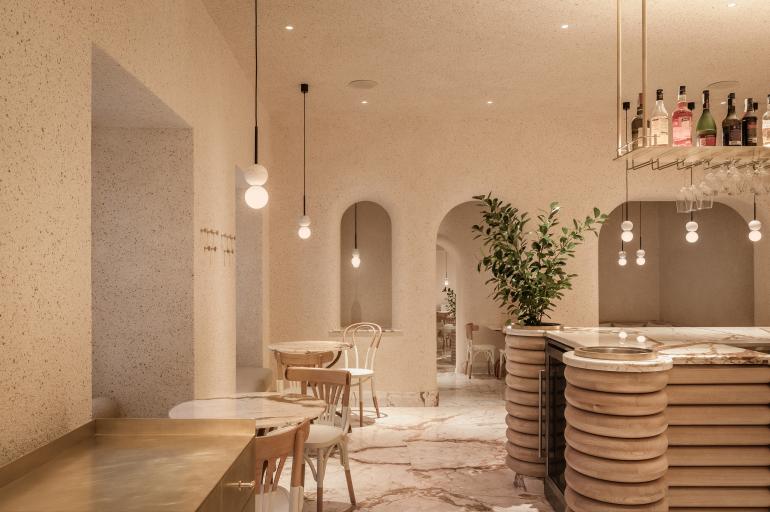
The second room features an island bar counter, echoing the formal language of the entrance display.
The third and largest room offers various seating options, with small tables for one or two people and a long communal table that encourages socialization.
To compensate for the limited natural light, the designers adopted a light color palette for all interior elements and introduced arched niches that visually connect the various rooms, thereby increasing the perception of openness. In respect for the place's memory, some elements of the previous furnishings were preserved and reinterpreted: the traditional bentwood chairs were restored and partially painted white, like glazed cookies, while the wooden bases of the old tables were paired with new round marble tops. An imposing antique Lviv Secession wardrobe, from the owner's private collection, presides next to the communal table, testifying to the connection with local history and craftsmanship.
Ph. Yevhenii Avramenko