WASP completed the 3D Printing of Itaca, the First Self-Sufficient 3D Printed Farm
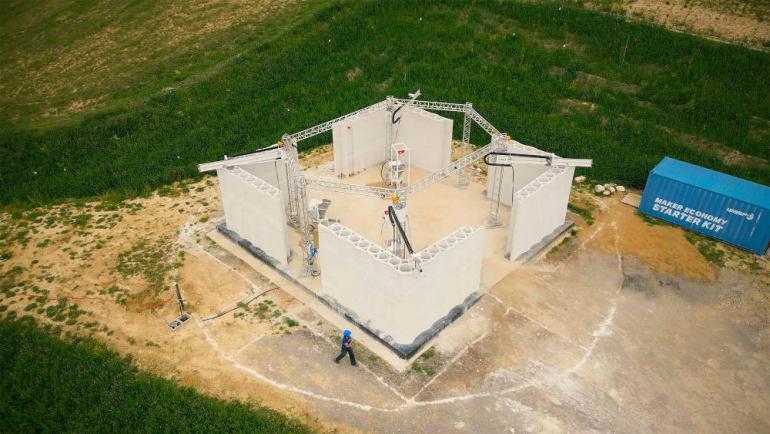
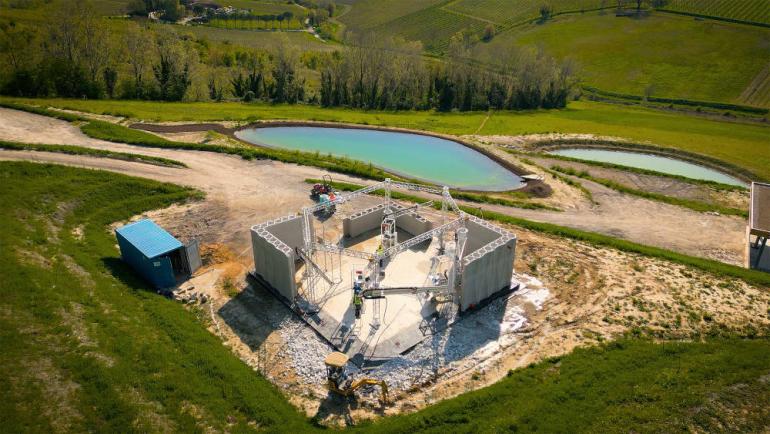
WASP has finished printing the walls of Itaca, the first certified 3D-printed construction located in the Shamballa open-air laboratory in the hills of Northern Italy. The project was first announced by Massimo Moretti, founder and president of WASP, on the main stage of Italian Tech Week in Torino, where he introduced it as WASP’s initiative to develop a 3D-printed, self-sufficient farm and living model based on a circular micro-economy.
One of the main goals behind Itaca’s construction was to create a 3D-printed building that meets the same standards as traditional structures, including earthquake resistance, in compliance with Italian and European regulations. The project aims to establish a new paradigm for sustainable construction that is easily replicable worldwide, thanks to the rapid transmission of information enabled by 3D printing technology and the use of Crane WASP, a versatile and accessible machine capable of operating even in remote areas.
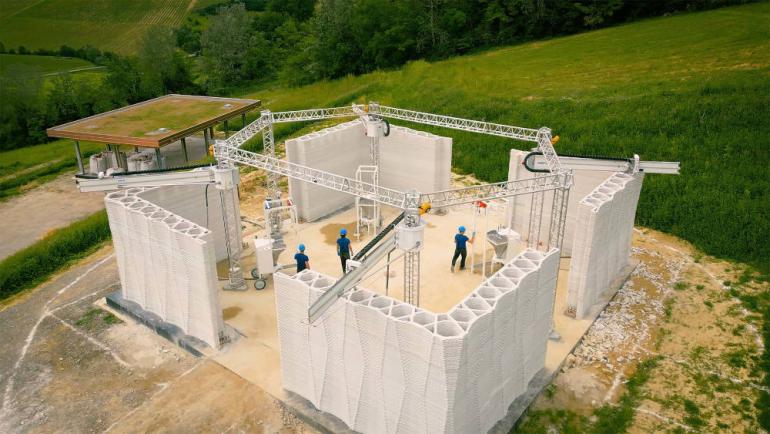
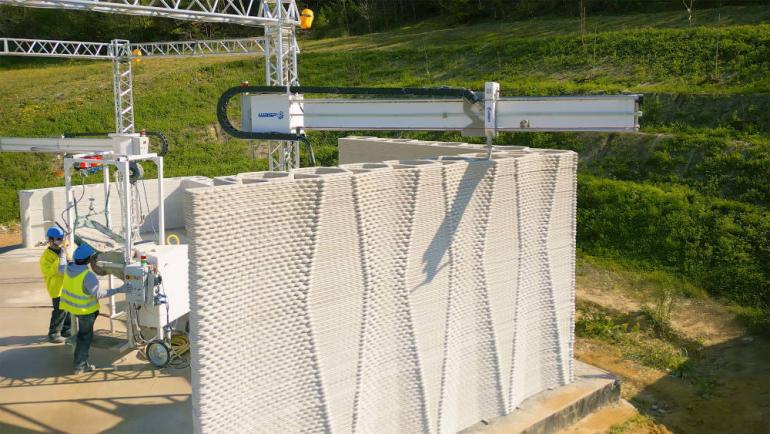
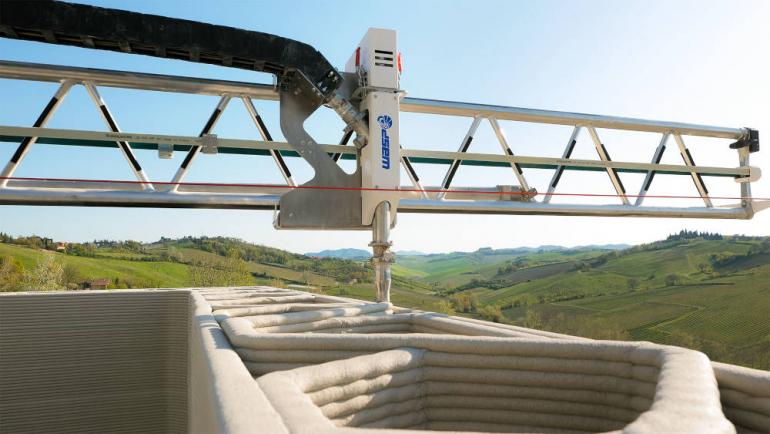
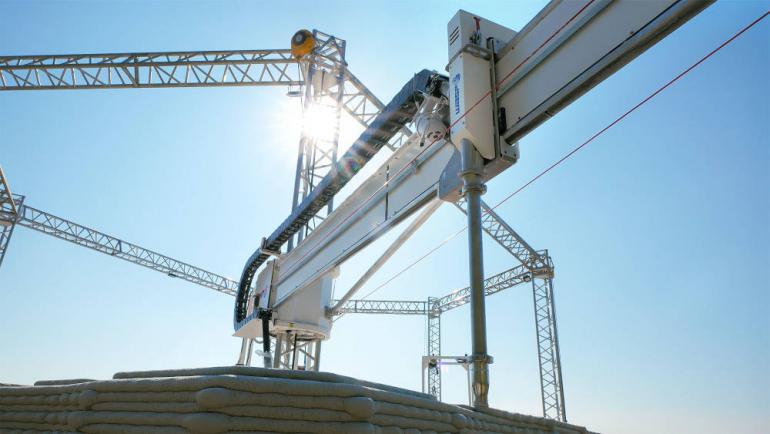
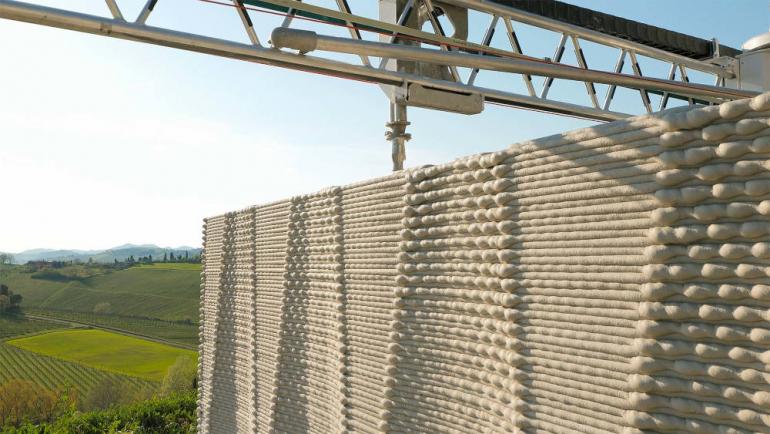
The construction of Itaca was executed by WASP 3D Build, WASP’s innovative startup dedicated to 3D-printed construction using a new configuration of the Crane WASP system, featuring four robotic arms positioned at the vertices of a hexagonal structure. This setup enables the simultaneous printing of four wall sections, significantly accelerating the building process. When operating simultaneously, the four arms can complete the structural shell of a house in as little as a couple of days.
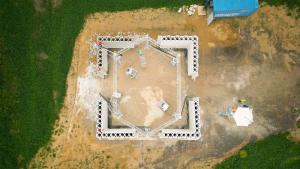
Itaca’s layout is inspired by the geometry of a Mandala, and it consists of a square inscribed within a circle. The design includes four main walls located at the corners of the square, each side featuring a central opening. The total area of the building is 164.9 m2, with each wall standing at 380 cm and requiring approximately 24 hours to print.
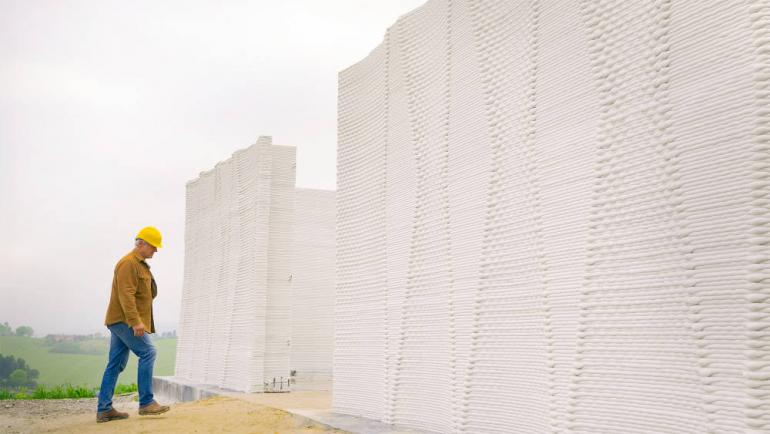
The walls are printed using a lime-based mixture without any concrete, selected for its lower carbon emissions compared to traditional cement, while still meeting the high-performance standards required for safe and durable construction. The lime-based mix was also selected for its high breathability, which allows the walls to better self-regulate their temperature and avoid mold formation on their surfaces.
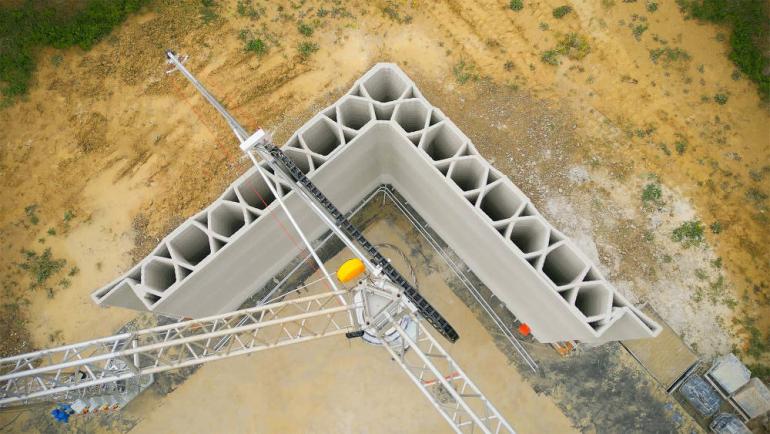
Inside the wall infills, a series of reinforcement columns will be inserted to enhance structural integrity, ensure compliance with earthquake regulations, and support the load of the green roof to be installed above. To improve thermal regulation and energy efficiency, the walls have been designed with a significant thickness of 60 to 70 cm, and their infills will be packed with rice husks sourced from waste produced by the agri-food supply chain and natural lime powder. This approach enables the creation of internal insulation rather than external, resulting in a passive energy house.
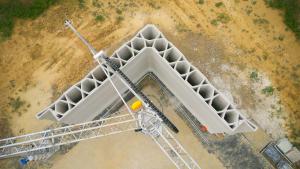
The infill system in the walls was designed to make them ventilated, helping regulate indoor temperature, reduce energy demand, and lower emissions associated with heating and cooling systems.
The structure also integrates radiant heating systems and electrical installations, embedded directly during the printing process, eliminating the need for post-construction interventions. This includes heating, electrical wiring, and insulation. Moreover, the ventilation system integrated into the wall structure enables effective air distribution throughout the interior spaces, transforming the building into a “living” house capable of breathing. It also allows sanitizing substances to be dispersed into the air, further enhancing indoor air quality.
By combining the selected construction materials with natural insulation derived from industrial byproducts, the environmental impact of the walls is drastically reduced, to the point of achieving a negative CO₂ emissions balance. In regions where regulations allow, the same architectural module of Itaca can also be built using earth as a construction material, further contributing to the reduction of the building’s overall environmental impact.
Future developments
The Itaca Project is not solely focused on the construction of the building itself, but also on the innovative solutions adopted for managing the surrounding land. These measures aim to enable intelligent and sustainable use of local resources, with the ultimate goal of creating a micro-circular economy capable of supporting human life while respecting the environment. Building on this vision, the project embraces a holistic approach to environmental regeneration and sustainable design.
Two rainwater harvesting basins were created on the surrounding land to promote water recovery, control soil erosion, and support agricultural activities. The intervention made it possible to capture and retain water in an area previously characterized by rapid runoff and severe summer drought, transforming the basins into bio lakes used for irrigation. This process helped convert a monoculture area into a high biodiversity environment.
As part of the reforestation and agroforestry initiative aimed at restoring biodiversity, over 500 trees and 50,000 aromatic medicinal plants will be planted in the surrounding area. An AI-powered automatic garden is currently in development to be integrated into the Shamballa space. It is intended as a tool to foster collaboration between humans and machines, simplifying and optimizing the process of cultivating a small plot of land year-round. The system maximizes the use of limited space while also improving accessibility by reducing the physical effort typically required to maintain a traditional hortus. Additionally, a series of 3D printed vertical hydroponic systems will be installed to ensure fresh vegetables all year round, using minimal water.
On top of Itaca, a green roof and solar panel system will be installed, providing insulation, reducing energy costs, and enhancing sustainability and urban biodiversity. Inside the farm, a laboratory will be established to extract active ingredients from plants and conduct biological research, using advanced technologies to fully harness the resources cultivated in Shamballa.